We are attending and presenting at the 26th International AIDS Conference in Rio de Janeiro, Brazil. We champion community-driven, people-centered HIV prevention, care, and treatment - solutions that build a future free of HIV.
Impact starts with people. We improve health by strengthening communities to lead, own their priorities, and turn hope into action across the countries where our members work.
Communities increasingly want self-reliance in health. We support them in taking control of their own health, setting their own priorities, and managing their own resources - ensuring care continues even in the hardest circumstances.
Through our people-to-people approach, we ignite communities to organize themselves, build their own knowledge, and lead the fight against HIV, TB, malaria, non-communicable diseases, and malnutrition.
Our Total Control of the Epidemic (TCE) model, pioneered in 2000, is carried out by locally recruited Field Officers working alongside community health workers and peer educators.
Together, they mobilize people, reduce stigma, and promote testing and treatment adherence through TRIOs — family- and friend-led support groups that help people living with HIV stick to their treatment, build healthier habits, and reach a suppressed viral load.
Time and again, we've seen that when people are informed, organized, and supported, entire communities move forward.
Our members work closely with ministries of health, local authorities, and partners to strengthen public health systems — including multi-sectoral programs that connect health, education, agriculture, and climate resilience.
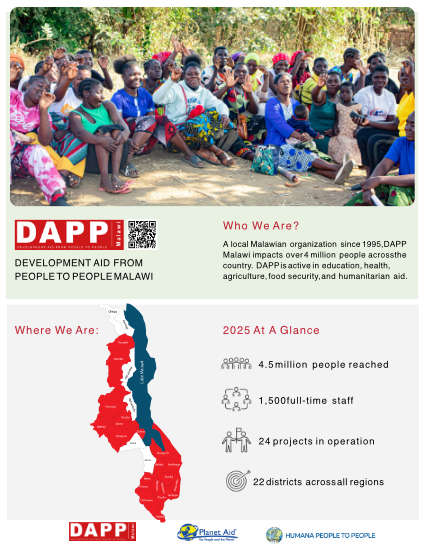
For the past 26 years, Humana People to People has run community-led HIV programs reaching over 29 million people across 12 African and Asian countries. Watch a short film from DAPP Malawi celebrating the achievements we are making as we support adolescent girls and young women to act against HIV in Malawi and build a better future.
We are co-hosting a high-level ministerial event and our members are delivering four poster presentations. Together, these presentations are telling a story of transformation driven by communities leading their own HIV control efforts.
At AIDS 2026 in Rio de Janeiro, we will participate in the high-level Ministerial Satellite Session: "Leading for the Future: Re-centering Women, Children and Adolescents as a Pathway to Sustained HIV Epidemic Control."
The event is co-hosted by the Global Leaders Network, The Government of South Africa, UNAIDS, the Gates Foundation and Humana People to People.
If you are attending AIDS 2026, join us on July 29, 18:00–19:30 BRT in Room 201.
The event will highlight the partnerships and collective action needed to accelerate progress toward a future free of HIV.
Keynote speaker Winnie Byanyima, Executive Director of UNAIDS, will reflect on the leadership needed to build that future, in the spirit of the newly adopted UN Political Declaration on HIV and AIDS, with communities leading the way.
Ministers will share perspectives on sustaining epidemic control, including integrating HIV into primary health care. Joined by philanthropy, civil society, and private sector partners, they share one commitment: health systems owned by governments, co-built with communities, and financed for the long term.
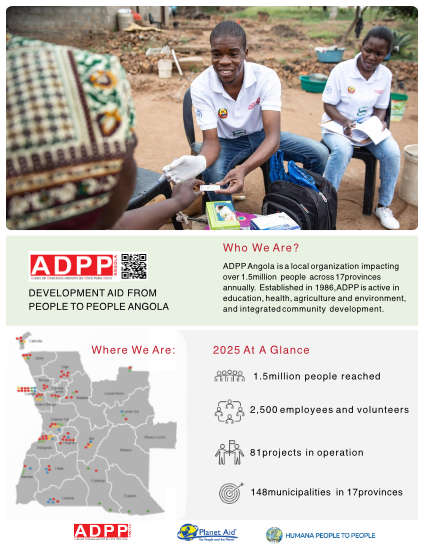
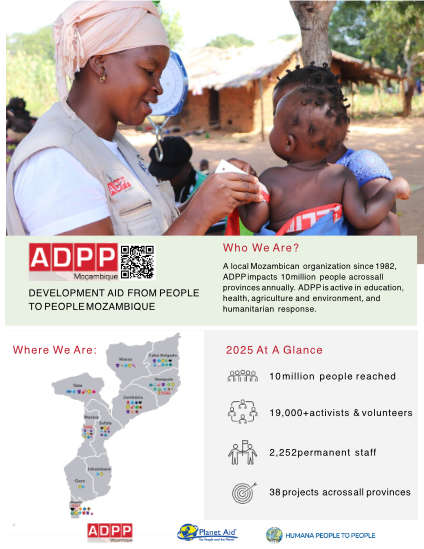
Our members will present four posters sharing data-driven findings on transformation and impact for people and their communities. ADPP Angola, ADPP Mozambique, Humana People to People South Africa, and Planet Aid will each show how we are assisting affected communities build a frontline of defense - expanding local capacity to know one's HIV status and access life-saving treatment.
Our members’ presentations are going to be as follows:
Humana People to People South Africa
Title: Community-led, layered health services drive high ART initiation, PrEP uptake, and TB treatment success among sex workers in rural South Africa
Presentation Code: TUPEE587
Presenter: Kilford Zimondi
Time: 12:00 PM – 01:00 PM BRT
Location: Riocentro Convention and Event Center - Pavilion 3
ADPP Mozambique
Title: Improving viral load suppression (VLS) among HIV+ children and adolescents in Mozambique: evidence from ADPP’s TRIO model
Presentation Code: WEPEE608 -
Presenter: Pires Paulino Canare Nota
Time: 12:00 PM – 01:00 PM BRT
Location: Riocentro Convention and Event Center - Pavilion 3
ADPP Angola
Title: Person-centered community approaches linked to reduced rates of mother-to-child HIV transmission in Angola: lessons from differentiated PMTCT services
Presentation Code: THPEE569
Presenter: Emelly Machisa
Time: 12:00 PM – 01:00 PM BRT
Location: Riocentro Convention and Event Center - Pavilion 3
Planet Aid / Humana People to People
Title: Beyond biomedical tools – trusting communities at the core of achieving and sustaining HIV epidemic control: lessons learned from a people-to-people movement.
Presentation Code: THPEE538
Presenter: Marie Lichtenberg
Time: 12:00 PM – 01:00 PM BRT
Location: Riocentro Convention and Event Center - Pavilion 3
O Meet our delegates representing Humana People to People at the AIDS 2026 conference in Rio.
Marie Lichtenberg is a global health and development professional with over three decades of experience in community-led epidemic response and partnership-building.
As Executive Director of Global Partnerships for Planet Aid, she builds strategic alliances that expand locally-powered health, education, and economic development across the Global South. Planet Aid is the U.S. member of Humana People to People (HPP), a network of 29 organizations united by the understanding that lasting change is built from within communities. Marie's leadership in HIV and TB began in the early 2000, working with colleagues to design a community-led response to the HIV epidemic, that was ravaging communities across Sub-Saharan. Working closely with Ministries of Health and National AIDS Councils, she led negotiations of country-level agreements that gave rise to HPP's flagship initiative, Total Control of the Epidemic (TCE).
Reaching over 29 million people to date, TCE mobilizes communities affected by HIV to take control of their own health, including counseling and testing, linkages to lifesaving treatment, and adherence support.
Marie specializes in designing partnership models that are cost-effective, scalable, and built to last — bridging HPP's grassroots networks with U.S. government agencies, national ministries, private sector innovators, and philanthropic partners.
At AIDS 2026, Marie brings both a practitioner's view of community-led HIV response at scale, and a partnership lens on how to finance and sustain it.
Kilford Zimondi is a seasoned leader in community-led health solutions, with nearly three decades of experience across Southern Africa. He has made significant contributions to HIV prevention, treatment, and health systems strengthening, underpinned by hands-on public health expertise built from the ground up - from door-to-door community mobilisation to national program leadership.
Kilford began his career in 1996 with Development Aid from People to People (DAPP) in Zimbabwe. He moved to Namibia in 1998, where he played a pivotal role in establishing HOPE Namibia, the organisation's first response to the HIV and AIDS crisis. In 2001, he joined Humana People to People in Botswana as Deputy National Project Coordinator, contributing to the Total Community Mobilisation program — a people’s response to the AIDS Epidemic, funded by the Government of Botswana and the US CDC.
In 2005, Kilford moved to South Africa, where he became National Project Coordinator for Humana People to People and led the rollout of the Total Control of the Epidemic (TCE) model - an evolution of the Botswana program - beginning in Soweto, Gauteng, and the Waterberg District of Limpopo, and later expanding to Mpumalanga, KwaZulu-Natal, and the Eastern Cape. At its peak, the program employed more than a thousand community health workers. Kilford also spearheaded the piloting of home-based HIV testing in Ehlanzeni around 2014–2015, bringing testing services directly into people's homes and further closing the gap in access to counselling and care.
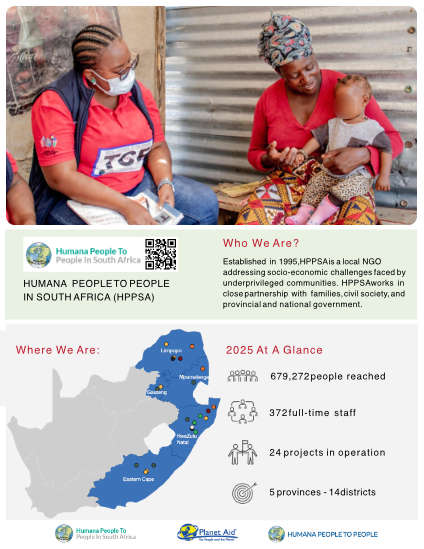
Since 2015, he has served as Country Director of Humana People to People South Africa, where he works closely with the Department of Health, civil society, and development partners to scale the TCE model. Under his leadership, the program has reached over 4.9 million people across five provinces to date.
At AIDS 2026, Kilford brings nearly thirty years of frontline, community-powered experience - a firsthand account of what it takes to build, adapt, and sustain HIV epidemic control models across diverse Southern African contexts, and what it takes to hand that ownership to the communities themselves.
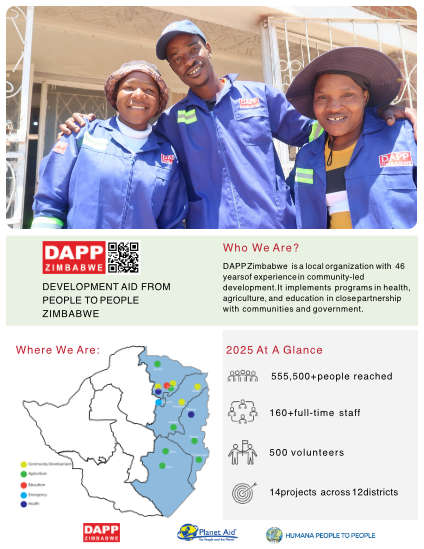
Emelly is an experienced development professional with over 21 years of service in community development and public health across Africa. She is currently working as a Senior Program Officer with The Humana People to People (HPP) Federation based in Zimbabwe.
In her current role, Emelly is focused on capacity building, programme development, and implementation support – working closely with the local members of Humana People to People. Her work involves program design, developing tools and systems, and supporting implementation of large-scale community health projects.
Emelly began her career as a Field Officer in Zimbabwe under the Total Control of the Epidemic (TCE) program and has since coordinated numerous HIV, TB, and Malaria projects in Zimbabwe, South Africa, and Mozambique, funded by private sector partners, the Global Fund and PEPFAR / CDC.
Driven by a deep passion for community empowerment, Emelly is committed to improving people's lives through disease prevention, health promotion, and sustainable development. Her global experience across Africa, Asia, and Latin America continues to shape her perspective and strengthen her dedication to advancing community health, working alongside people living in challenging situations.
At AIDS2026, Emelly brings over two decades of frontline and program-level experience implementing community-based HIV, TB, and Malaria interventions, offering a grounded, practitioner's perspective on what it takes to translate epidemic control strategies into lasting impact at the community level.
Pires Paulino Canare Nota is a Mozambican specialist in community development, with over 18 years of experience in the design, management, and implementation of community health interventions. A permanent member of ADPP Mozambique team since 2005, he stands out for his exceptional ability to engage communities, cultures, government structures, and donor agencies. He currently holds a leadership role in a rural resilience project, combining his extensive field experience with a strong academic background in public health and project management.
He holds a degree in Community Development from ISET-One World and a degree in Business Management from Eduardo Mondlane University (UEM), Mozambique. Over the past 18 years at ADPP Mozambique, Pires Paulino Canare Nota has demonstrated consistent professional growth, taking on roles of increasing seniority and impact in the community health sector. His career includes the supervision and management of projects in several critical areas:
HIV/AIDS (8 years): He played a key role in implementing the pioneering Total Control of the Epidemic (TCE) HIV/AIDS project, focused on door-to-door mobilization, testing expansion, linkage to treatment, and community prevention. His work has directly supported national and global targets, including progress toward the 95-95-95 goals.
Tuberculosis (6 years): He coordinated the Local TB Response Project across 15 districts in Zambézia Province and the Active Case Finding and Contact Tracing TB Project in Gaza Province across 7 districts.
Nutrition (2 years): Provided technical assistance to the Project's community mobilization agents in eight districts of Niassa Province, as well as to community mother leaders, 240 health promoters, and the nutrition program team at both provincial and district levels.
Malaria (2 years): Analyzed data and supported M&E staff training across the Malaria Elimination 8 Project (E8). Guided the design and implementation of surveys, including sampling procedures, sample size calculations, development of data collection tools and databases, and the analysis and reporting of results.
He has a strong capacity to document experiences, engage partners, and translate lessons learned into practical improvements in program design and policy advocacy.
He also has a proven track record in managing projects funded by major international donors, including USAID, USDA, the Global Fund, the World Bank, and Johnson & Johnson. His field experience spans a wide geographic coverage, having worked in eight Mozambican provinces: Maputo, Gaza, Nampula, Manica, Tete, Sofala, Zambézia, and Niassa.
Recognized for his technical competence and commitment to evidence-based programming, Pires Paulino Canare Nota is an author and presenter of work on the HIV response. His participation in the International AIDS Conference (AIDS 2026) aims to share ADPP Mozambique’s experiences in the fight against HIV, strengthen global partnership networks, and disseminate innovations that will directly benefit communities affected by the epidemic.
Catherine Griesedieck Hassler is a global health project manager with expertise cultivating strategic partnerships and managing global disease programs.
As senior project coordinator for Planet Aid, she fosters strategic partnerships to expand locally led community-development programs in Sub-Saharan Africa, Asia, and South America. Planet Aid is the U.S. member of Humana People to People (HPP), a network of 29 organizations united by the understanding that lasting change is built from within communities.
Catherine’s leadership in locally led disease programming began at USAID, first as part of the COVID-19 response and then for five years as a project coordinator with the TB team.
Catherine designed and managed TB programs in research, diagnostics, communications and program delivery. Catherine supported USAID’s TB programs in Africa to channel funding directly to local partners, ensuring sustainable and community responsive health programs.
Catherine specializes in designing and managing partnership models that are cost-effective, scalable, and rooted in their communities. She supports HPP’s local partners to reach philanthropies, foundations, private sector, and government partners.
At AIDS 2026, Catherine brings her passion for scaling locally led programming and supporting government-led integrated health models.
Elizeu Tchilala is a community development, project management, and public health professional with experience implementing HIV/AIDS and Tuberculosis response programs in Angola, focusing on community-led approaches and strengthening the link between populations and health services.
His journey at ADPP Angola began in 2018 with the Stop TB Project, where he participated in the implementation of community-based prevention strategies, case identification, patient follow-up, and promotion of adherence to tuberculosis treatment. This experience allowed him to develop a deep understanding of the role of communities in responding to epidemics and improving access to essential health services.
Later, Elizeu contributed to the Tuberculosis and HIV Control Project, supporting the implementation of integrated community health interventions, including social mobilization, health education, HIV prevention, support for treatment retention, and reduction of stigma associated with the diseases.
Within the scope of the READY+ Project, an initiative focused on strengthening the response to HIV among adolescents and young people, Elizeu played an active role in supporting the implementation of youth-centered strategies, including peer mentoring, community mobilization, strengthening field teams, and promoting approaches that increase adolescents' and young people's access to information and health services.
Throughout his professional experience, Elizeu has worked at the intersection of community development, project management, and strategic partnerships, contributing to the creation of sustainable and people-centered solutions to address the challenges of HIV and Tuberculosis.
Currently, he is a member of ADPP Angola’s Partnerships Team, where he supports the strengthening of institutional relationships, collaboration with national and international partners, and the development of opportunities that promote the operation and expansion of the organization's programs.
Since 2018, Elizeu has built a field-grounded perspective that bridges community-level experience with program management and partnership building. His work reflects the conviction that sustainable health responses depend on the active participation of communities, coupled with strategic alliances between governments, civil society organizations, and development partners.
Henrique Domingos Kayenga is a community development, project management, and community health professional with 10 years’ experience in implementing HIV and tuberculosis (TB) programs in Angola. His work focuses on community-led approaches, strengthening the connection between communities and health services, and improving access to quality healthcare.
Henrique joined ADPP Angola in 2016 and has been involved in the implementation of Global Fund-supported projects. His experience includes HIV prevention programs, particularly Prevention of Mother-to-Child Transmission (PMTCT), adolescent and youth interventions, and index case testing. In tuberculosis programs (DOT-C), he has worked closely with communities to identify people with TB symptoms, refer them to health facilities for diagnosis, support treatment follow-up, and promote adherence to TB treatment.
Through this work, Henrique has gained a strong understanding of the critical role that communities play in preventing and responding to epidemics, while helping improve access to essential health services.
He currently serves as a Partnerships Officer at ADPP Angola, bringing nearly 10 years of experience in community development and comprehensive support for people affected by HIV and TB. Throughout his career, he has contributed to the design and implementation of community-based initiatives that reduce stigma, expand access to treatment, and empower vulnerable populations.
In his current role, Henrique combines his field experience with partnership development, resource mobilization, and collaboration across sectors to strengthen sustainable and innovative responses to HIV and TB in Angola.
Interested in meeting with us at the 26th International AIDS Conference or learning more about our work?
Feel free to reach out at information@humana.org. We wish to network and connect!
Follow us on social media for more updates on AIDS 2026 conference:
Facebook | LinkedIn | Youtube